Editor's Pick
Climate governance and regional cooperation / Can the Bay of Bengal move beyond geopolitical rivalry?
As Rooppur begins trial operation, are we prepared for an emergency?
Can Bangladesh create ten million jobs in five years?
From Airbus to energy: The expanding Bangladesh–France partnership
Turn the ICJ genocide verdict into a roadmap for Rohingya return


Khulna’s underworld is expanding at an alarming pace, with nine criminal gangs active in the industrial city. Turf wars, drug trafficking, extortion and killings have left residents living in fear. Rival gangs are fighting for territorial control and dominance over the drug trade, fuelling violence across the city. This four-part series examines the activities of the nine gangs, the forces behind the expanding criminal networks and their impact on residents. The Daily Star publishes the first two instalments of the series today.
Nine criminal groups are vying for control of Khulna’s underworld, carving out areas of influence and competing over drug trafficking, extortion and businesses. Their rivalries have frequently spilt into deadly violence.

Police and local sources say the groups, once confined to smaller neighbourhoods, have expanded their reach since the political changeover on August 5, 2024, recruiting unemployed youths and teenagers to strengthen their networks.

A senior law enforcement officer, requesting anonymity, said police had been largely ineffective in the immediate aftermath of the political change, allowing criminal groups to expand drug trading and acquire firearms.
The groups that have become more active after the uprising are Grenade Babu’s B Company, Sheikh Palash group, Nur Azim group, Ashik Bahini, Humayun Kabir’s Huma Bahini, Sheikh Saidur Rahman’s Tengki Shawon group, Arman Sheikh group, Shakil Sheikh group and Nasim group.
Although they operate in particular neighbourhoods, they often compete for overlapping areas.
Nur Azim and Ashik groups are active in Khulna Sadar and Labanchara, while Tengki Shawon’s influence extends to Sonadanga and Khalishpur. Arman Sheikh and Huma Bahini operate in Daulatpur and Khan Jahan Ali while Shakil Sheikh’s group is mostly affiliated with Arman’s one.
B Company has a wider network, particularly around Shamsur Rahman Road, Sheikhpara, the court area and Dakbangla. The groups’ activities also extend to Dighalia, Aranghata, Koyra, Paikgachha and Dumuria, where smaller armed networks allegedly control drug trading, fish enclosures, sand businesses, land and contract work.
The rivalry between B Company and Sheikh Palash’s group has been particularly violent. Police linked the double murder outside the Khulna Metropolitan Sessions Judge’s Court on November 30, 2025 to disputes over drug money, extortion, and territorial control between the two groups.


On October 4 this year, Nasim group leader Nasimul Gani was shot dead in Dighalia, highlighting the spread of the violence beyond the city.

Khulna Superintendent of Police Sarker Omar Faroque said police were aware of the nine groups and were conducting special operations against their members and patrons. Police had not found political affiliations involving the gangs, he said.
“We are also trying to trace the sources of firearms and working to dismantle the interconnected drug and arms networks,” he added.
Meanwhile, Khulna City Corporation Administrator Nazrul Islam Monju told The Daily Star that several Khulna leaders met Prime Minister Tarique Rahman in Dhaka on Saturday. Those present included an MP, the president and general secretary of the BNP’s metropolitan unit, and the district council administrator.
Monju said the prime minister listened to their accounts of the situation in Khulna but gave no immediate instructions or comments on joint operations or other measures.
HOW THE GROUPS EMERGED
Interviews with residents, political leaders, and police officers suggest that most groups grew out of smaller criminal networks that had operated for years, allegedly under political patronage.
Iqbal Hossain, a resident of Iqbal Road in his late 60s, recalled how the city’s underworld changed hands over the decades.
 For all latest news, follow The Daily Star's Google News channel.
“In the 1990s, the Sarbahara groups controlled the city. Then came Ershad Sikder’s rule. Those were terrifying days. Bodies would turn up on riverbanks almost every day,” he said.
He said the political influence of Sheikh Helal and his brothers became dominant from 2009.
Another resident, Abul Hasan, alleged that former lawmaker Mizanur Rahman Mizan helped establish a group under then Chhatra League leader Sheikh Palash Talukder after the 2014 election.
The group, which included Ashik Islam and Nur Azim, allegedly controlled extortion activities but gradually slipped out of Mizan’s control after 2016, with Ashik and Azim eventually operating independently.
Helal is on the run, while Mizan and Palash are in jail.
After the AL government’s fall in August 2024, smaller groups expanded as the previous political power structure collapsed.
Palash’s efforts to establish control over several neighbourhoods brought him into conflict with Grenade Babu. Local sources attribute at least 10 killings to their rivalry, although the figure could not be independently established through case records.
Palash’s arrest on March 30, 2025, further fragmented his group, with some members allegedly joining rival networks.
INSIDE B COMPANY
Among the nine groups, B Company has allegedly developed one of the most extensive organisational networks.
Police sources said its leader, Roni Chowdhury, acquired the nickname Grenade Babu following a grenade attack on the vehicle of then Khulna mayor Sheikh Tayebur Rahman in 2004. He reportedly named his group after Mumbai underworld figure Dawood Ibrahim’s D Company and also uses the alias “Nawab”.
Law enforcement sources describe B Company as a multilayered network involving a second-in-command, cashier, shooters, motorcycle teams, drug sellers, informants, and social media promoters.
The group allegedly has several hundred members. Some receive Tk 7,000 to Tk 15,000 a month, while others are provided motorcycles, weapons or drugs to sell.Police records show at least 15 cases against Grenade Babu, involving allegations of murder, attempted murder and assault. Joint forces raided his house on June 7, 2025, and recovered weapons, ammunition, cash and documents but failed to arrest him.
Police sources allege that he now directs the network from abroad using foreign telephone numbers.
Khulna Metropolitan Police has listed 181 criminals in the city, including around 25 associated with B Company, 12 with Nur Azim’s group and nine with Ashik Bahini.
YOUNG RECRUITS, PAID ATTACKS
The recruitment of unemployed youths has emerged as another worrying feature of the gangs’ activities, with investigators finding evidence of payments for individual crimes.
In the March 4 killing of Sramik Dal leader Masum Billah at Dakbangla intersection, accused Ashok Ghosh said in a confessional statement before a court that he had taken part in the murder under a Tk 50,000 agreement.
On November 11, police detained Fahad Hossain while he was allegedly attempting to set fire to the July memorial at Shibbari intersection. Rafiqul Islam, officer-in-charge of Sonadanga Police Station, said Fahad had told investigators he was offered Tk 2,000 to carry out the act.
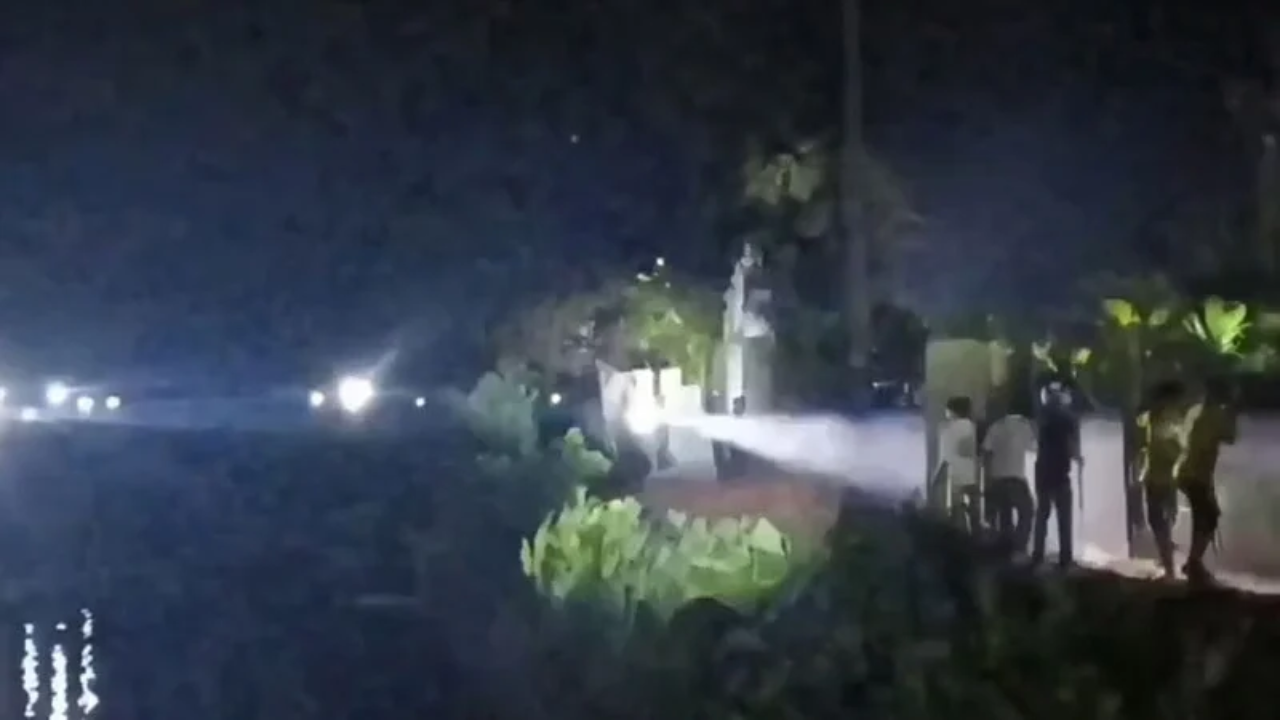
Video footage of attacks on Sandhani Clinic, New Apollo Diagnostic Centre, and Chinese Palace restaurant also showed that many participants appeared to be in their early 20s.
Police and local officials said unemployment, poverty and drug use were drawing young people into criminal activities.
Khulna Sadar Police Station OC Lokman Hossain said youths from impoverished neighbourhoods were being recruited for small payments and drugs, while City Corporation Administrator Nazrul Islam Manju said many gang members were aged between 17 and 20.
Mizanur Rahman Babu, president of the Communist Party of Bangladesh’s Khulna metropolitan unit, also blamed unemployment and the closure of jute mills, claiming that workers of the closed mills were still owed around Tk 4,500 crore.
“These gang members are our own sons, brothers, and family members. They too have a right to live. Nobody willingly chooses this dark path, but the system has pushed them towards it,” he said.
“Factories have closed, unemployment has become a curse, and as a result, some are taking up arms.”
OLD CONNECTIONS, ELUSIVE SUSPECTS
Several current gang figures also have family links to people previously associated with Khulna’s criminal underworld.
In South Tutpara, residents identified Asad Peshkar as an underworld figure in the 1990s. His son Amin Muhuri subsequently became involved, while Amin’s sons, Fardin Khan and Faisal Khan, are now on police lists.
Other families in South Tutpara and Chandmari also have multiple members listed by police, including four brothers -- Nur Azim, Shahriar Islam Rocky, Jiko Khan and Rinku -- and Ashik and Sajib, sons of Mashiur Rahman alias Zulfikar Dakat.
Despite repeated operations, police have struggled to dismantle the networks and bring suspects to justice.
In the Masum Billah murder case, only four suspects had been arrested in eight months, while those identified in video footage remained at large, according to information gathered for this report.
A similar picture emerged in the courthouse double-murder case. Most of the accused remained fugitives when the chargesheet was submitted on November 4. B Company member Miraj Hossain alias Kauwa Miraj was listed as absconding, while another accused, Ejazul, secured bail after four months.
Sheikh Jahangir Hossain Helal, Khulna-2 (Sadar) MP and secretary of Khulna Metropolitan Jamaat-e-Islami, said the nine criminal groups had existed in some form for years but had recently become more aggressive, with the increasing use of firearms and open criminal activities particularly alarming.
He said the administration already had information about the groups, their operations and those providing them with shelter and political patronage. Jahangir urged the home ministry to deploy a specialised force or launch joint operations to contain the violence.
Comments
Related News
Three suffer burns in Tongi house fire
Bisleri water's sample found to be unsafe
Top criminal Sweden Aslam held at Dhaka airport while trying to leave country
Climate talks collapse in chaotic end to COP31
COP31 fails to agree on climate deal
Continue reading at The Daily Star
This story was collected by Khulna Info and links back to the original publisher.